

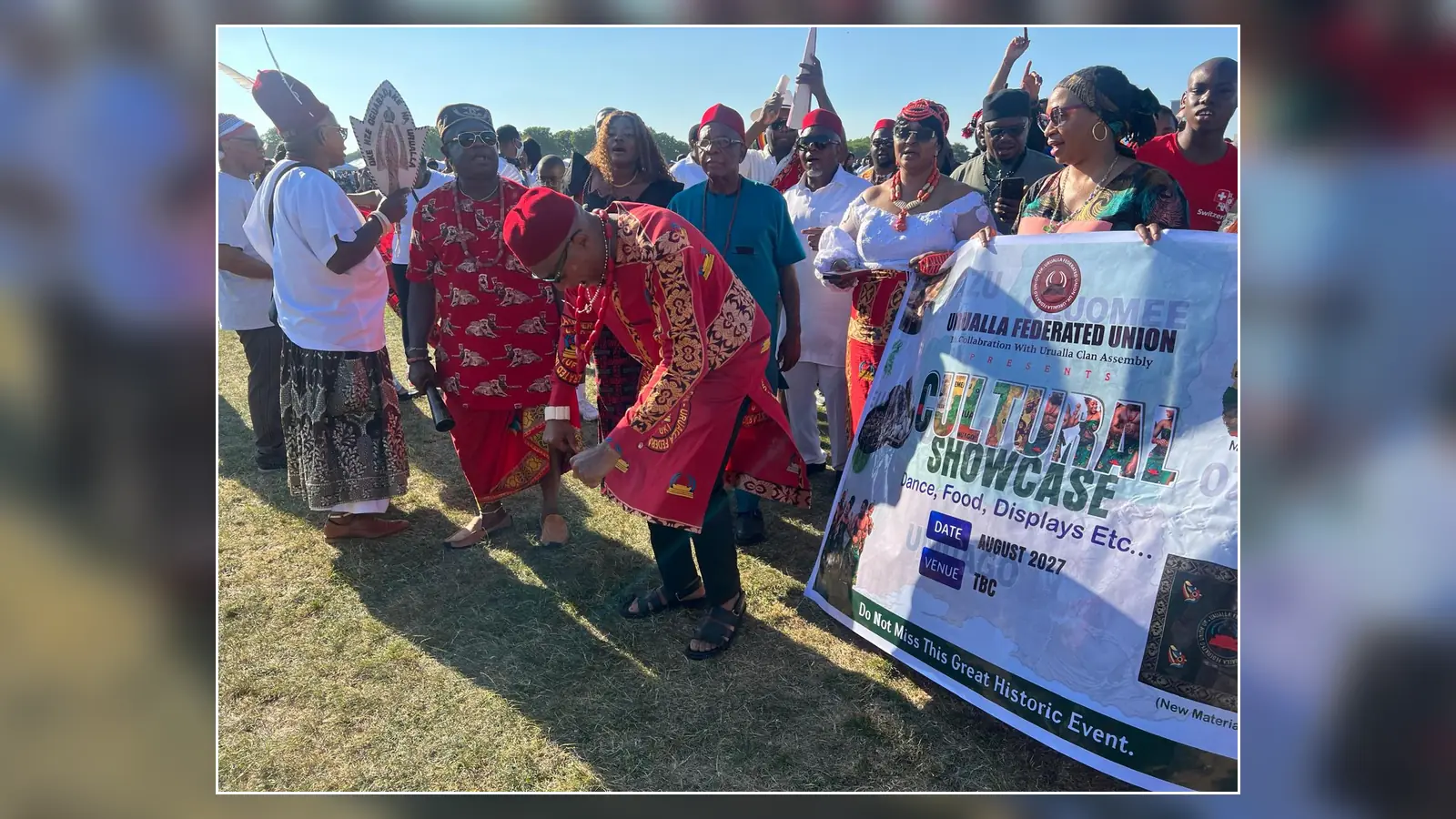
Thousands gathered in Enfield for a colourful display of Igbo fashion, food, music and tradition, highlighting the growing role of cultural festivals in connecting African communities across generations.
By Pentacept Reporters
LONDON: Enfield Playing Fields came alive with colour, music and cultural pride as members of the Igbo community gathered for the 11th annual Igbo Festival of Arts and Culture UK.
The festival, also widely known as Igbo Day London, was held on Saturday, 11 July 2026. It brought together families, cultural groups, traditional leaders, performers, food vendors and visitors for a public celebration of one of Africa’s most prominent cultural communities.
Presented by the Congress of Igbo Leaders UK and Ireland, the event offered more than entertainment. It created a meeting point between heritage and modern diaspora life, giving attendees an opportunity to celebrate where they come from while strengthening relationships within the community they now call home.
A Pentacept Reporters correspondent who attended the festival described it as well organised, vibrant and welcoming. Parking facilities were available, while the festival grounds provided space for cultural performances, food, social interaction and family activities.
One of the most striking features of the occasion was the clothing.
Across the grounds, attendees appeared in richly designed traditional outfits, including embroidered shirts, flowing dresses, wrappers, coral beads, caps and other garments associated with different communities across Igboland. The variety of styles transformed the venue into a display of identity, craftsmanship and cultural confidence.
For many attendees, the clothing was not simply ceremonial. It represented family roots, community affiliation and the determination to keep Igbo traditions visible outside Nigeria.
Traditional leaders join the celebration
The presence of traditional leaders added significance to the festival. Some travelled from outside the United Kingdom to participate, according to observations shared with Pentacept Reporters.
Their attendance connected the diaspora celebration with established cultural institutions in Nigeria. It also reflected the importance placed on leadership, ancestry and community representation within Igbo society.
Traditional rulers and community leaders often play an important role in preserving customs, resolving communal matters and providing a sense of continuity between generations. At a diaspora festival, their presence can help younger people understand that culture is not limited to clothing and entertainment. It also includes history, responsibility, values and collective memory.
The festival was particularly relevant for British-born children and young people of Igbo heritage. Growing up away from their parents’ or grandparents’ homeland can make cultural identity more difficult to maintain. Large public celebrations give younger generations an opportunity to hear the language, experience traditional music, observe cultural practices and see thousands of people proudly expressing a heritage they share.
Food, music and community
Food was another central part of the experience.
Vendors served a range of Nigerian and Igbo dishes, giving visitors an opportunity to reconnect with familiar flavours and introducing other attendees to the culinary traditions of south-eastern Nigeria.
Music and dance performances brought further energy to the celebration. Traditional rhythms, contemporary sounds and communal dancing created an atmosphere that crossed generational boundaries. Older attendees could recognise familiar elements from home, while younger participants experienced them within a modern London setting.
The combination of food, music, dance, fashion and ceremony showed how cultural festivals can communicate history without relying solely on formal teaching. A child watching a traditional performance or listening to an elder speak may begin asking questions about language, ancestry and family history.
This is particularly important at a time when many diaspora communities are concerned about the gradual loss of indigenous languages and traditions among younger generations.
A platform for diaspora enterprise
Beyond its cultural value, Igbo Day London also created commercial opportunities for independent traders, caterers, designers, artists and other small businesses.
Events of this scale can provide vendors with access to a concentrated audience that already understands or is interested in their products. A food business can reach new customers, a fashion designer can display traditional craftsmanship, and an artist can introduce culturally inspired work to buyers from different backgrounds.
This commercial activity reflects a longstanding association between Igbo communities and enterprise. In the diaspora, cultural festivals can function as informal marketplaces where community, creativity and economic opportunity meet.
They also create opportunities for partnerships between businesses in the United Kingdom and producers in Nigeria. Clothing, food products, artwork and other cultural goods displayed in London may originate from supply chains that support tailors, farmers, craftspeople and entrepreneurs across Africa.
Culture as a bridge
London is home to communities from almost every part of the world, and cultural festivals contribute to the city’s identity. For immigrant communities, these occasions offer a chance to celebrate their heritage publicly rather than confining it to private homes or community halls.
For visitors from outside the Igbo community, the festival offered an introduction to a culture whose influence extends across business, literature, music, education and public life.
The event also demonstrated that identity in the diaspora does not have to be reduced to a choice between being British and being African. People can participate fully in British society while maintaining meaningful relationships with their ancestral heritage.
This dual sense of belonging is increasingly important for second and third-generation Africans who are building identities shaped by both their family histories and their experiences in the United Kingdom.
Festival followed by public dispute
In the days after the festival, the event became the subject of a public disagreement involving Enfield Council’s leadership and the organisers.
Council leader Alessandro Georgiou alleged that the festival exceeded its permitted capacity, generated noise complaints and left the playing fields requiring additional cleaning. He said the organisers’ deposit would be retained and that further cleaning costs would be charged.
The Congress of Igbo Leaders disputed key parts of that account.
In a response published by the Enfield Dispatch, the organisation questioned the reported attendance figure and rejected the allegation that it had failed to clean the park. The organisers said they paid a council-recommended agent, worked with cleaners at the venue and had video evidence of the clean-up operation.
They also said the event concluded without recorded incidents of violence and called for the outstanding matters to be addressed through the appropriate review process.
The disagreement remains an important part of the public record and should be resolved through evidence, contractual procedures and engagement between the organisers and the council.
It also offers a lesson for organisers of rapidly expanding diaspora events. As attendance grows, planning for capacity, transport, waste management, security, noise control and communication with residents becomes increasingly important.
Successful cultural festivals depend not only on the quality of their programmes but also on strong cooperation with councils, emergency services, local communities and venue managers.
A heritage carried forward
Despite the post-event dispute, the scenes witnessed at Igbo Day London reflected the importance of cultural belonging to communities living far from their ancestral homeland.
The traditional clothing, food, music and presence of community leaders gave attendees more than a day of celebration. They provided a visible connection to history and an opportunity to pass that history to another generation.
For the Igbo community in Britain, the festival was a reminder that heritage can travel, adapt and remain relevant. It can be expressed in the heart of London while retaining its relationship with communities thousands of miles away.
The strength of such an event should ultimately be measured not only by the size of the crowd, but also by the conversations it begins, the businesses it supports and the cultural knowledge it helps to preserve.
As families left Enfield Playing Fields, the music may have ended for the day, but the deeper work of carrying Igbo identity forward continued.
Additional reporting: Pentacept Reporters
Photographs: Pentacept Reporters
